Major Projects
Redlynch Sports Stadium
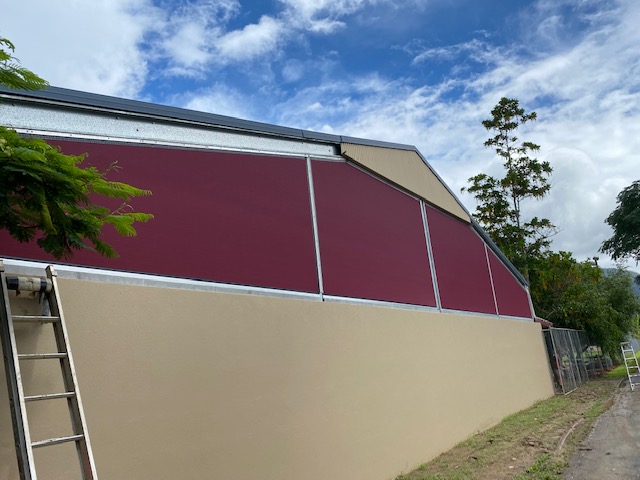
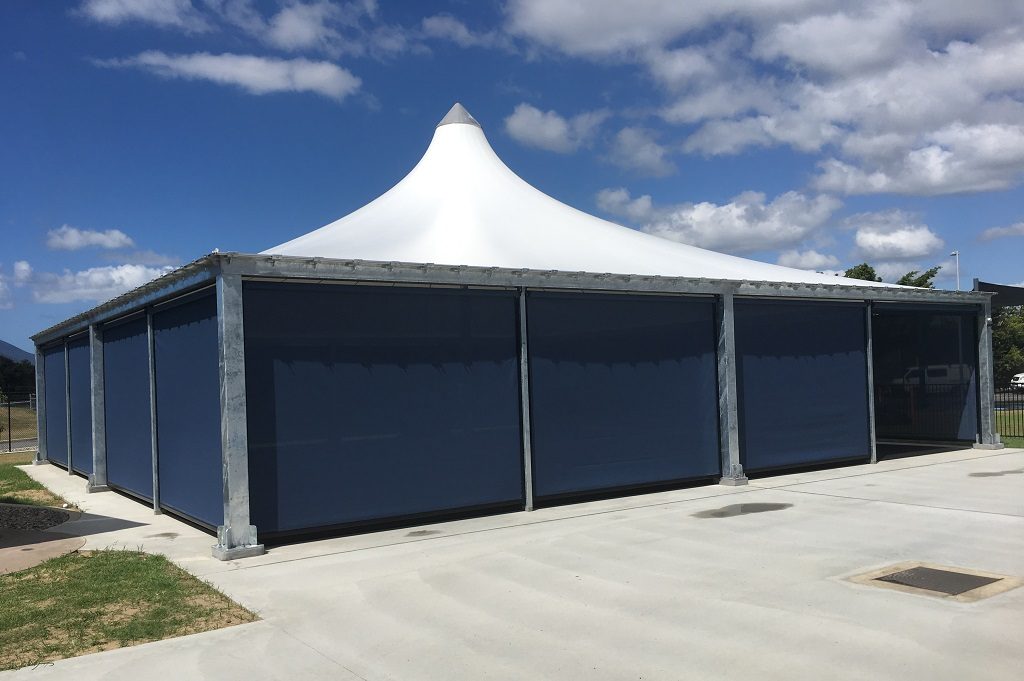
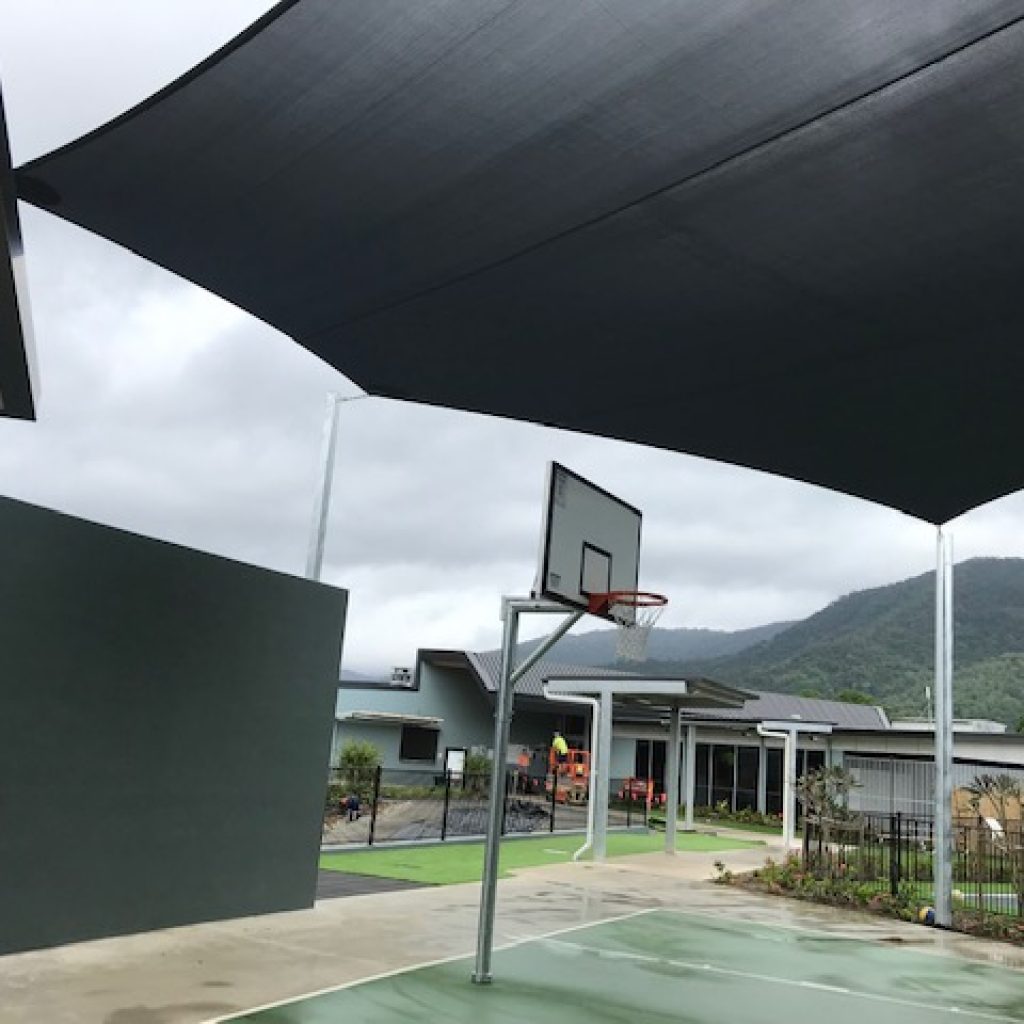
This state of the art fabric structure project required for the design and installation of multiple sails to provide weather protection to a new indoor sports and Futsal stadium. The Architect had based their original design on using a free standing high bay Aramax roofing system with a clear span coverage area of 85 x 42 meters.
This design has no internal support columns and relies on massive perimeter posts and overhead beams for structural support. Due to the roofing manufactures engineering requirements the outside of the structure could not be fully enclosed and had to allow winds to blow through when weather conditions were severe to protect the structural integrity of the main building.
The client however required weather protection for the court surface so after considering every possible construction method available the architects came to the conclusion that fabric sails were the only design that would meet all the requirements without comprising the structural integrity of the building.
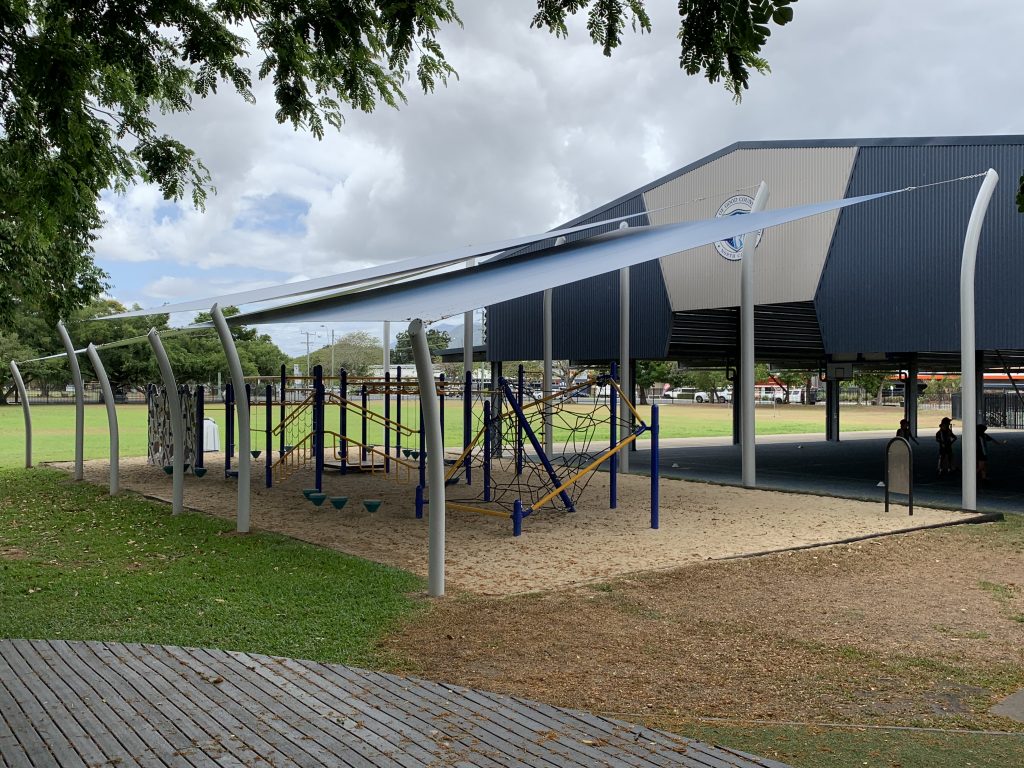
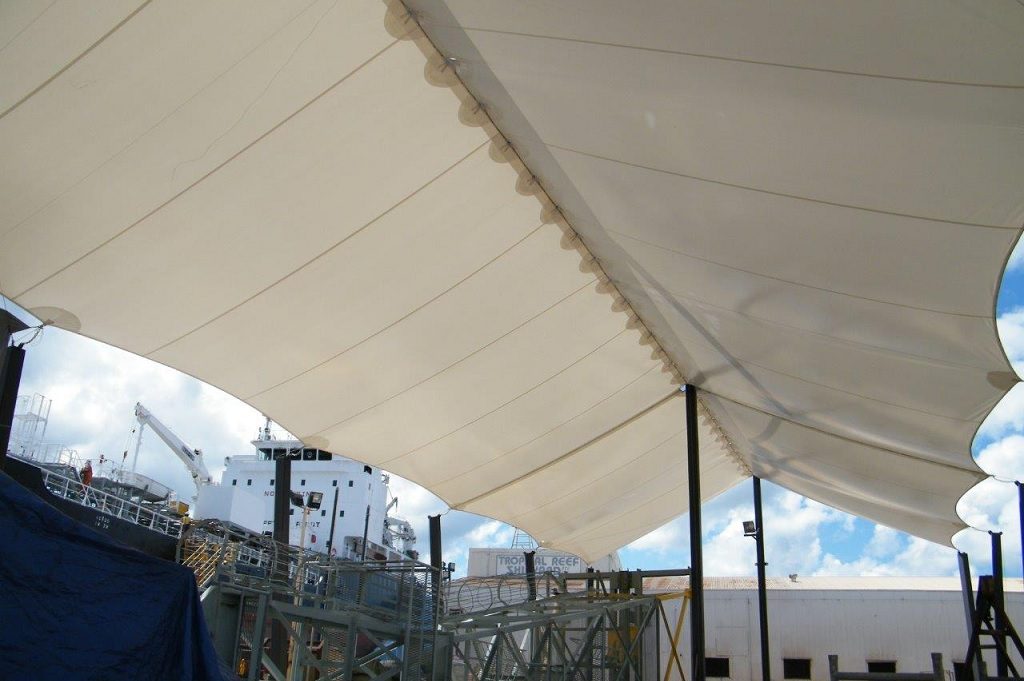
Working closely with Aramax engineers and the project architects our design team developed a concept that included multiple racked back perimeter posts in both single and twin sections, overlapping membrane sails using a high quality architectural fabric on all sides that attached under the main roof and projected several meters outside the main playing surface. The sails were set at a 45 degree angle in most cases with the lowest point 4 mtr above the playing surface. This allowed for wind to still blow around and under the main building thus protecting the structural integrity of the design but at the same time blocking rainfall onto the playing surface. As an added measure we also calculated the forces applied by the sails to the main structure in severe weather conditions and installed a breakaway system for the sails that would trigger only if winds above design loads were applied or if the structural integrity of the building was being compromised.
The project present several challenges including working at heights, tight construction timelines, column cut outs, and balancing engineering requirements with the size and area of the sails and the need to offer weather protection as well as ensuring the whole area was fully enclosed so that when in use stray balls could not exit the facility.
The sails had to cut around the main 1 meter diameter structural I beam support columns using a twin plated design that doubled as a tensioning point and eliminated any fabric distortion normally associated with such a large cut out. Sail tensioning was via backstays and rigging screws to ground level via pivoting posts. Shade cloth panels that were easily removable were also installed around the perimeter fence for extra weather protection. The windward side sails had additional hollow and longer strops to allow bulk air circulation and separate sections were installed above to retain weather protection. Bird nets were also installed below sails to fully enclose the facility.
The project was completed on time and on budget. The design intent has been achieved beyond expectation. Apart from solving the engineering and weather protection issues the use of fabric sails has a duel function of softening direct sunlight and elimination shadows on the playing surface during the day. At night they also provide a light radiation surface using up lights to defuse illumination combined with a striking translucent visual effect from the exterior.
Since opening the facility has hosted several State, National and International tournaments with great success.
Airport Beer Garden Canopy
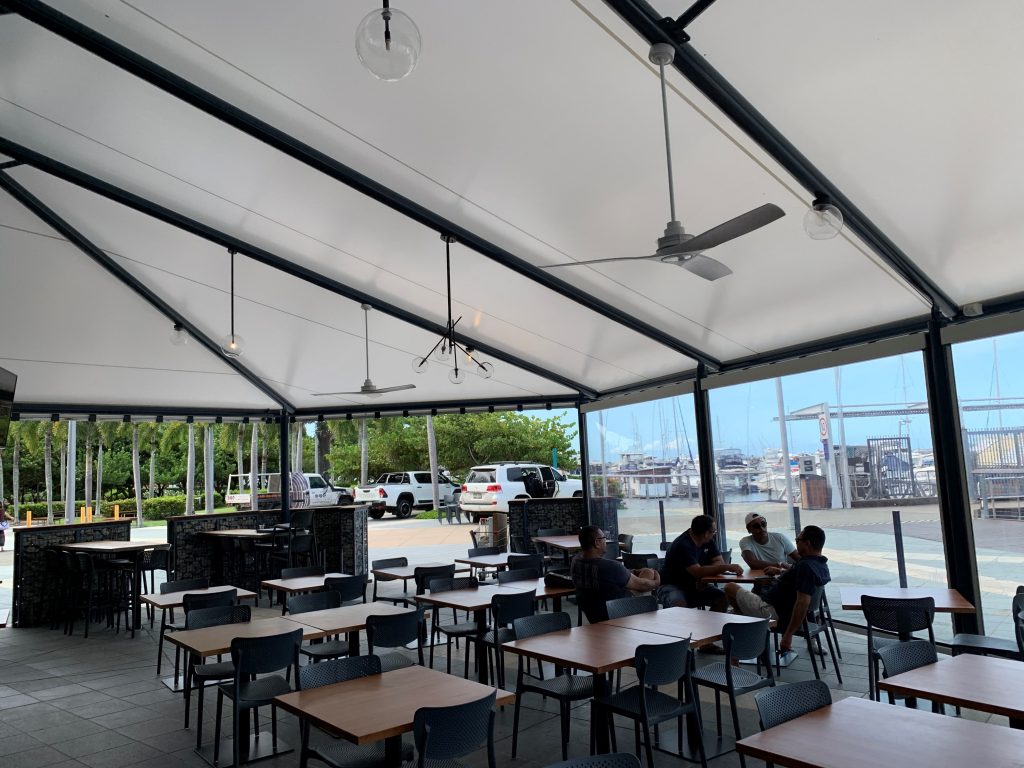
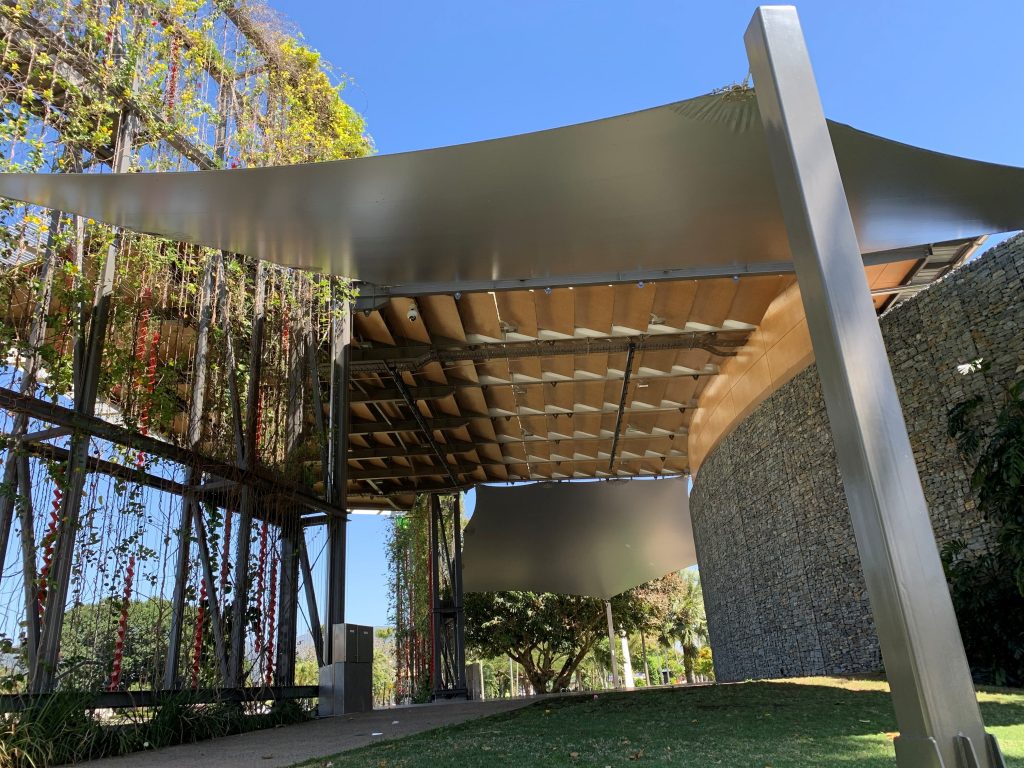
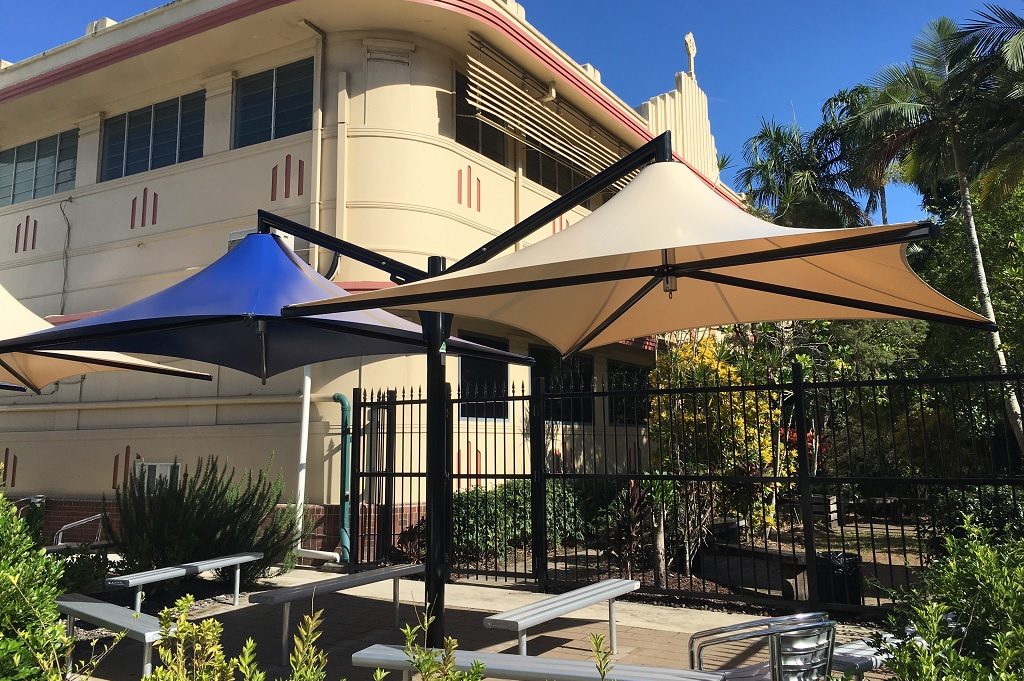
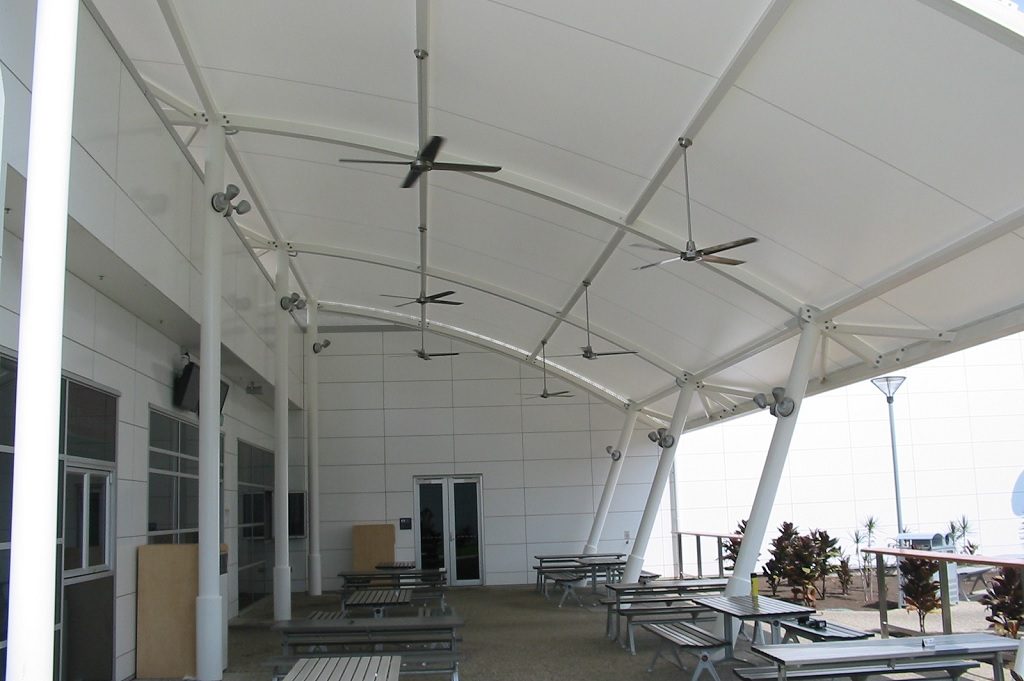
The design parameters for this Domestic and International Airport redevelopment called for all on site building structures including fabric to be rated to the highest wind code specifications of 205 kilometres per hour.
The client required a freestanding fabric awning covering a large outdoor restaurant area adjacent to the departures lounge of the facility. The brief was to design a structure that was:
- Compliant with the site building codes.
- Was striking in appearance and offered protection from the elements.
- Incorporated a fire rated premium quality translucent membrane roof to allow natural light in however at the same time comply with Australian Civil Aviation Authority standards regarding reflection of light above during night time operations.
- Not attached structurally to existing buildings and use minimum support posts that did not interfere with entrance doorways or emergency exits.
- Was completely waterproof on existing building sides and allowed for all water runoff to site stormwater system.
- Include fans, lighting and security cameras.
These requirements presented several challenges for our design team including the need to control sway effect on the structure during heavy winds; meeting CASA night time landing standards relating to light transmition above, water runoff requirements, sealing between structure and existing building and a separating mast design to enhance the visual effect.
Firstly we produced several concept designs and using a modelling program eliminated one by one any non compliant component. Using the height of the rear wall of the existing building as a starting point we designed a curved frame that projected just above the roofline to ensure maximum weather protection on that side. We then carried this line through to the lower outside perimeter columns and counter levered the fame beyond them by 1 meter. The rear support columns were set at a vertical angle however to enhance the visual appearance of the design the front columns were set with a lean towards the exterior of the design and with a mast type protrusion above roof level for added effect. These protrusions were created using matching top and bottom attachment plates through bolted after the membrane was fitted to give the appearance of a continuous post without having to cut the skin around a complete section.
The fabric tensioning system comprised a track system of robust aluminium extrusion on all perimeter edges. The tracks are linked to the steel frame with adjustable bolts spaced every 250 mm to achieve an extremely tensioned membrane finish. Also to seal between the side of the project and the existing building a separate fabric pelmet was designed that did not restrict independent movement of the two structures. A custom gutter system was added to the front section and positioned to catch all the water runoff and channel to the site stormwater system.
Initial modelling showed significant sway during maximum design wind load conditions which may have caused collision between the structure and the existing side wall. Due to the need to keep the area below free of any separate bracing or cables we were unable to use this method for bracing. We solved the issue by designing a tapered Colum section with heavy duty base plates incorporating oversized gussets and footings to strengthen the design and reduce any sway. To prevent trip hazards the base plates and gussets were finished below floor level and a secondary slab was installed around them to give an unimpeded finish to base of column.
A lighting technician was engaged to assess the light penetration above the membrane at night. Using the light transmission figures relevant to the selected fabric we were able calculate the illumination of light above and then design and position lighting in a way to comply with the CASA standards without reducing the overall lighting requirement for the area below. Along with the lighting fixtures we also were required to allow for overhead fans and security cameras with access cables inside the frame.
The whole structure above footing level was fabricated off site and fully installed in only 3 days. It has been a great success meeting all of the client’s requirements as well as the CASA standards and is now a very popular venue for departing passengers as well as being used for many corporate functions. It has already been tested in several severe weather events and the entire structure performed to specification.\
All Abilities Playground
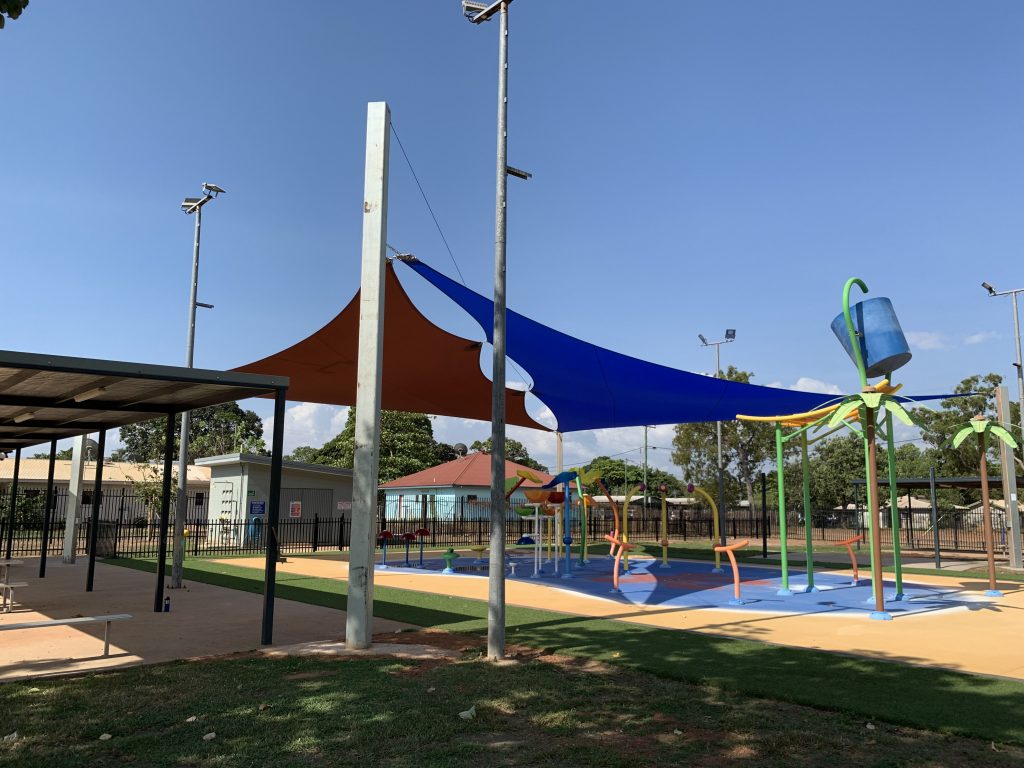
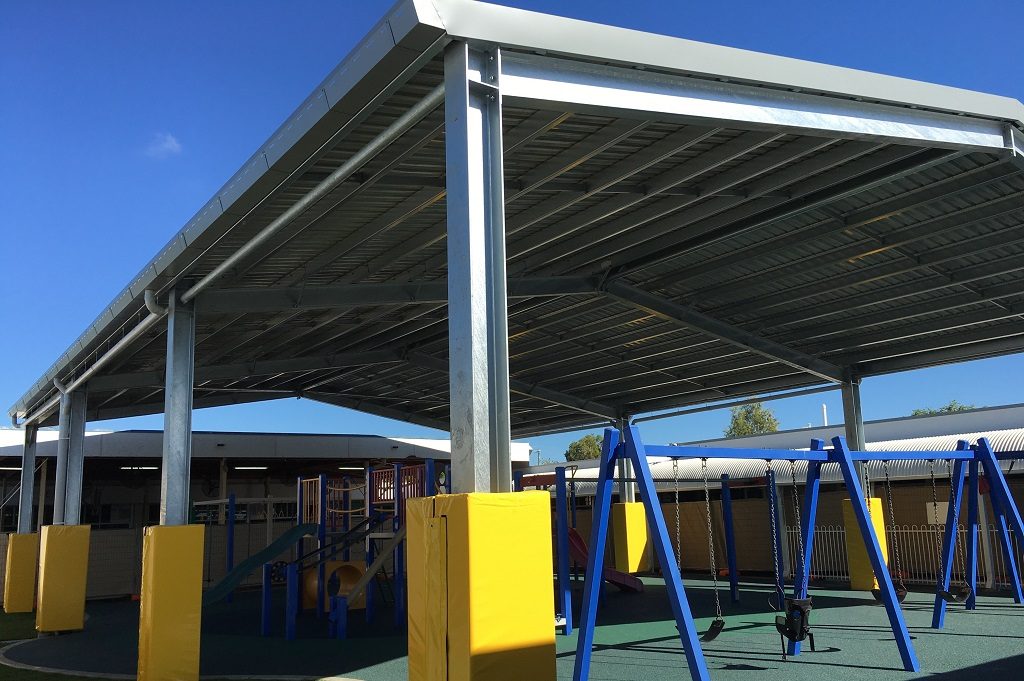
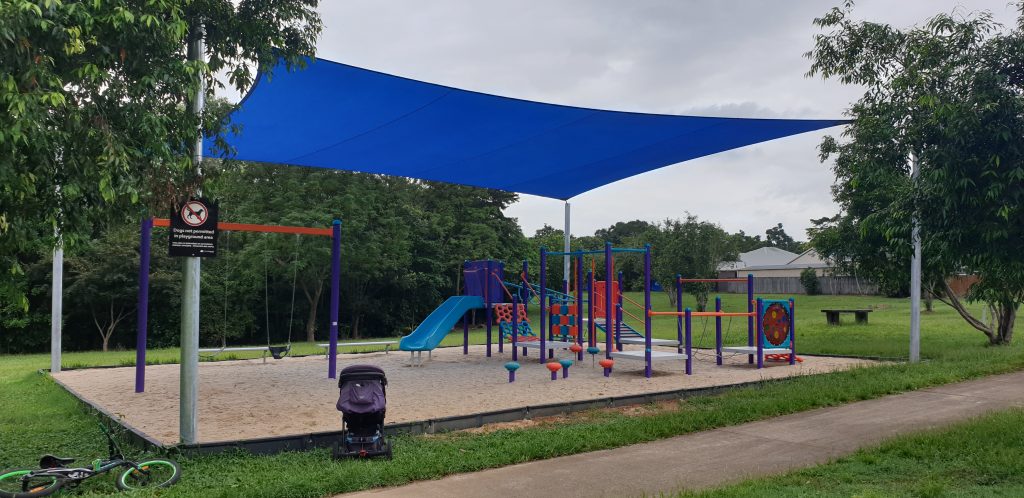
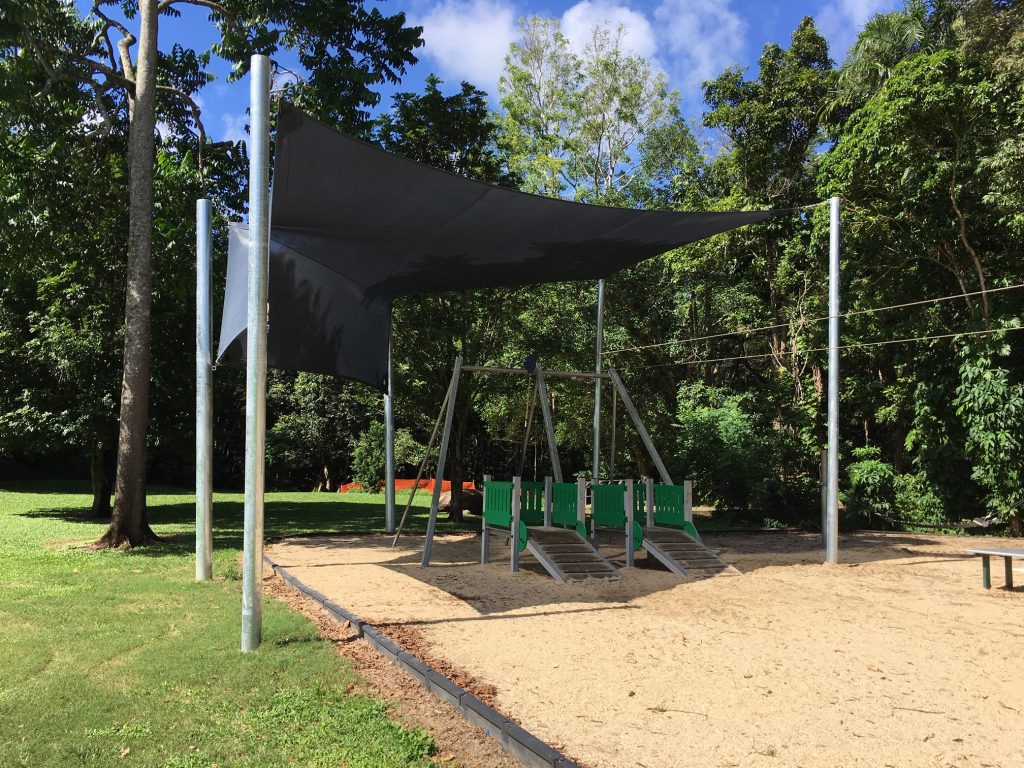
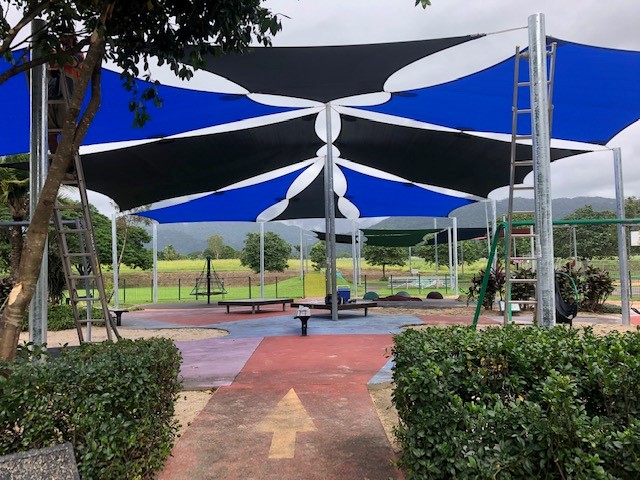
The “ All Abilities Playground “ shade sails were designed in conjunction with a new playground development that specially caters for the needs of children with disabilities and encouraged different types of outdoor play to breakdown the barriers often faced by children with special needs.
The client had pre selected several different types of play equipment and the sails had to be designed in a way to fit within the proposed set out and offer full shade to specific areas of the equipment as well as several seating areas located within and around the play area.
Due to the need for parents and carers supervising at the facility to have at all times full and unobstructed views of the play areas from the seating positions we were required to ensure our post set out allowed for this requirement as well.
Before commencing sail design we met on site with the client and marked out the position of the proposed play equipment. Creating a grid of the site based on this layout we were able to do a concept design that broke the area up into 3 individual sections – Junior, Senior and parent seating.
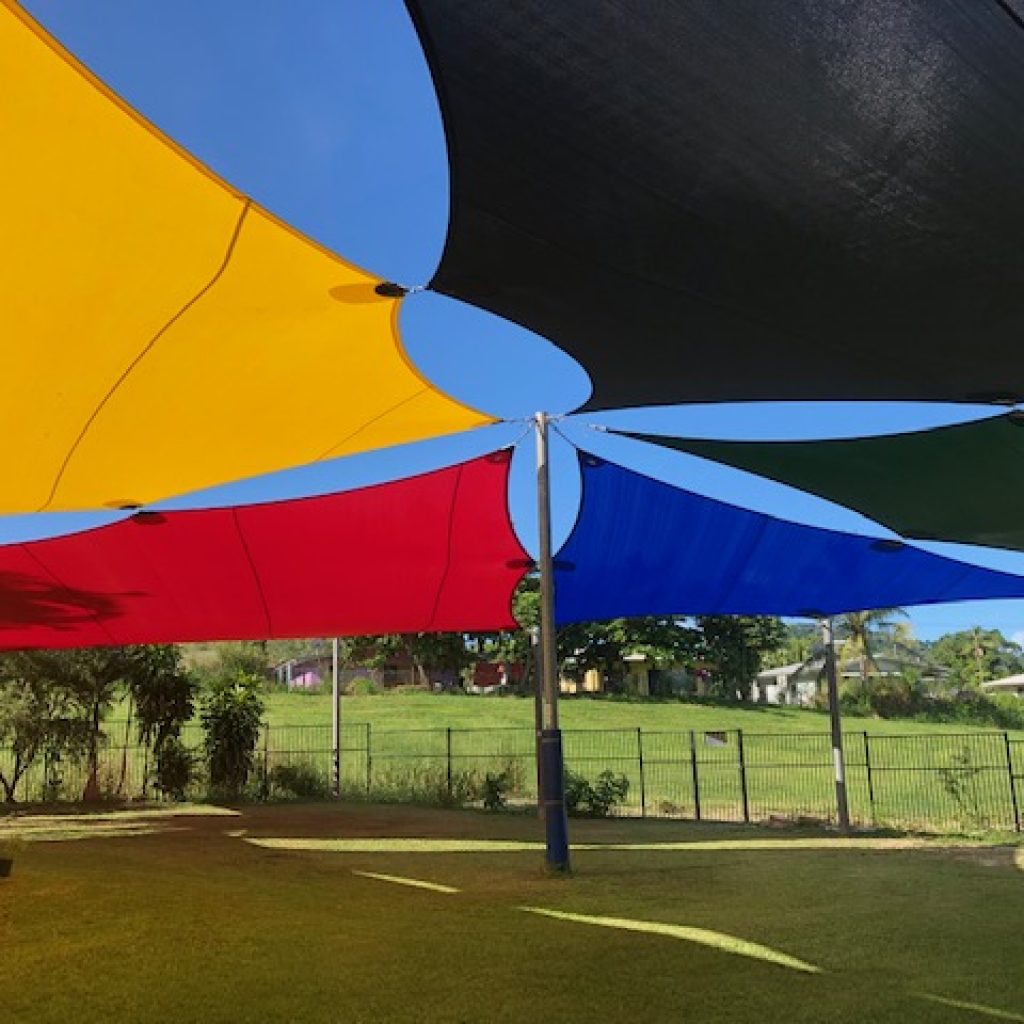
Using this plan we then set out our post positions complainant with fall zone regulations, shade coverage in relation to the equipment and seats as well as overall height of sails above equipment. Due to the height of some play equipment combined with the need to use minimal posts we selected a design that made use of a number of higher central posts that had several sails radiating out from them at various heights which allowed larger sails without the use of mutable support posts. We then selected a variety of bright colours in a premium quality high UV block shade fabric to complement the facility. These colours were also a similar to the play equipment.
Before construction could commence the design was checked by a number of Government Departments and disability consultants in relation to OHS compliance for the intended use and was approved without any changes. Post installation was done in coordination with several other separate trades on site and sails were then manufactured to site specific building codes that included cable edges, heavy duty patches and 10 mm chain attachments that can be tensioned or released with a removable quick release system by trained staff.
Once completed the project was fully assessed by a team of consultants on behalf of the client and was approved for immediate use. The facility is an exceptional success for both the special needs children and giving their parents the peace of mind knowing it’s a purpose built facility. Apart from meeting all the technical requirements of the client the shade sail layout as designed has resulted in an area that protects users from the sun and has a bright and open feel which complements the rest of the playground and gives these special children a facility like no other in the region.